Key takeaways
- Measure the opening and look at the slope before you pick a style.
- Swing gates are simple and strong, and slide gates suit tight or sloped spaces.
- Posts and hardware matter as much as the gate itself.
- Plan for an operator now, even if you install it later.
Swing or slide
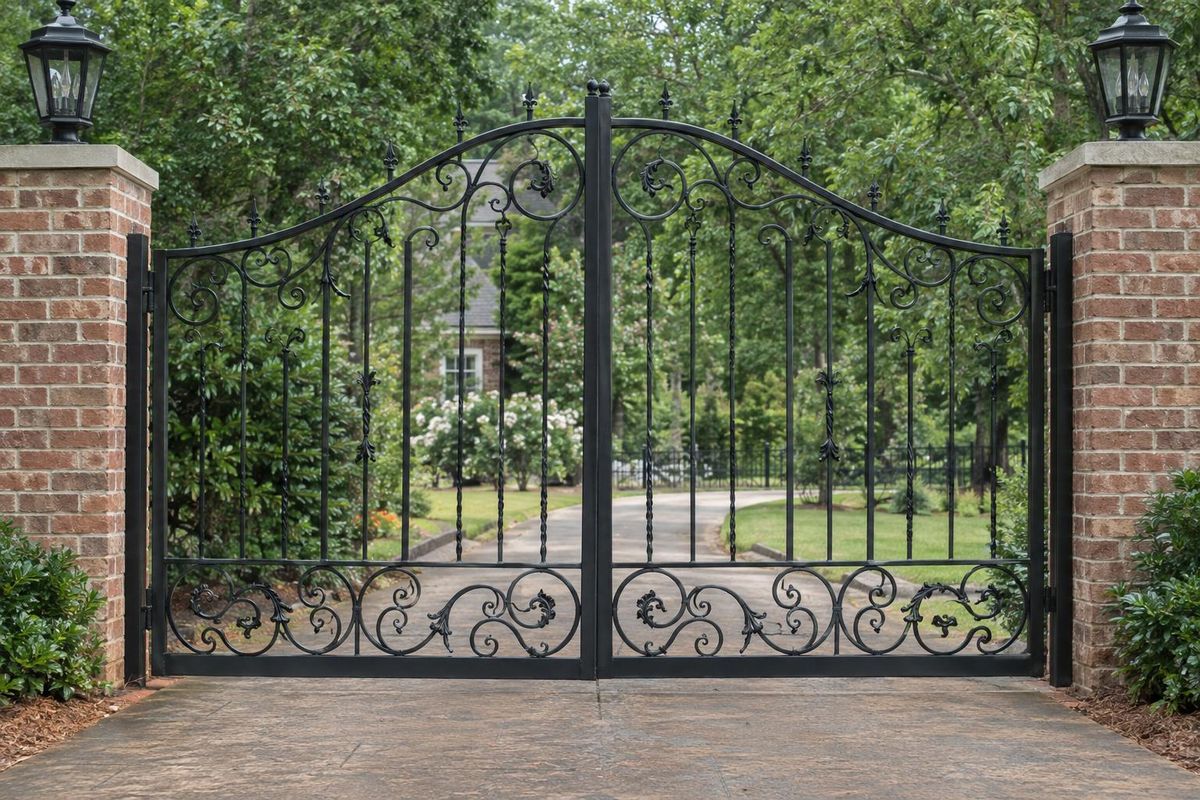
Swing gates open on hinges and are simple, strong and economical, but they need clear room to swing. Slide gates roll along a track or hang from a cantilever and suit narrow drives, slopes and busy roads.
A site visit helps, because slope, snow and space often decide it.
Material and style
Steel gates are strong and suit farms and estates. Aluminum gates are light and low-maintenance. Open pickets let the view through, while solid panels give privacy.
Match the gate to the fence, the house and the way you will use it.
Posts and hardware
A heavy gate needs deep, strong posts and quality hinges. Most gate failures start at the post, not the gate. Latches, stops and drop rods are worth getting right.
In Middle Tennessee's clay soil, posts need good concrete footings to resist heaving.
Openers and security
If you may add an automatic opener, build the gate and mounts for it from the start. Gates for operators need to swing freely and have strong, level frames.
Safety features such as sensors and a manual release are worth including.
Quick answers
How wide can a swing gate be?
A single leaf is practical up to around twelve feet or so. Wider openings use two leaves.
Do I need a permit for a gate?
Sometimes, especially for entry gates and operators. Check your local rules.
What keeps a gate from sagging?
Strong posts, quality hinges and a properly braced frame.