Key takeaways
- A railing should be solid when you push on it, not wobbly.
- Height and spacing rules are set by local code, so check yours.
- Rusted bases and loose anchors are the most common failures.
- Fix or replace a weak railing before someone leans on it.
What a safe railing feels like
Push hard on the top rail and the posts. A safe railing does not wobble or move noticeably. Look at the base of each post for rust, cracks and loose fasteners.
Check that the rail is continuous and easy to grip.
Height and spacing
Building codes set minimum rail heights and maximum gaps between balusters, mainly so children cannot slip through and adults cannot topple over. Requirements vary by location and building type, so check your local code.
Older railings often do not meet current standards.
Common failures
Rusted post bases, cracked welds, loose anchor bolts and rotted wood at the attachment point cause most railing failures. Water is usually the cause.
In Nashville and across Middle Tennessee, wet seasons and freeze-thaw cycles loosen anchors over time.
When to call a welder
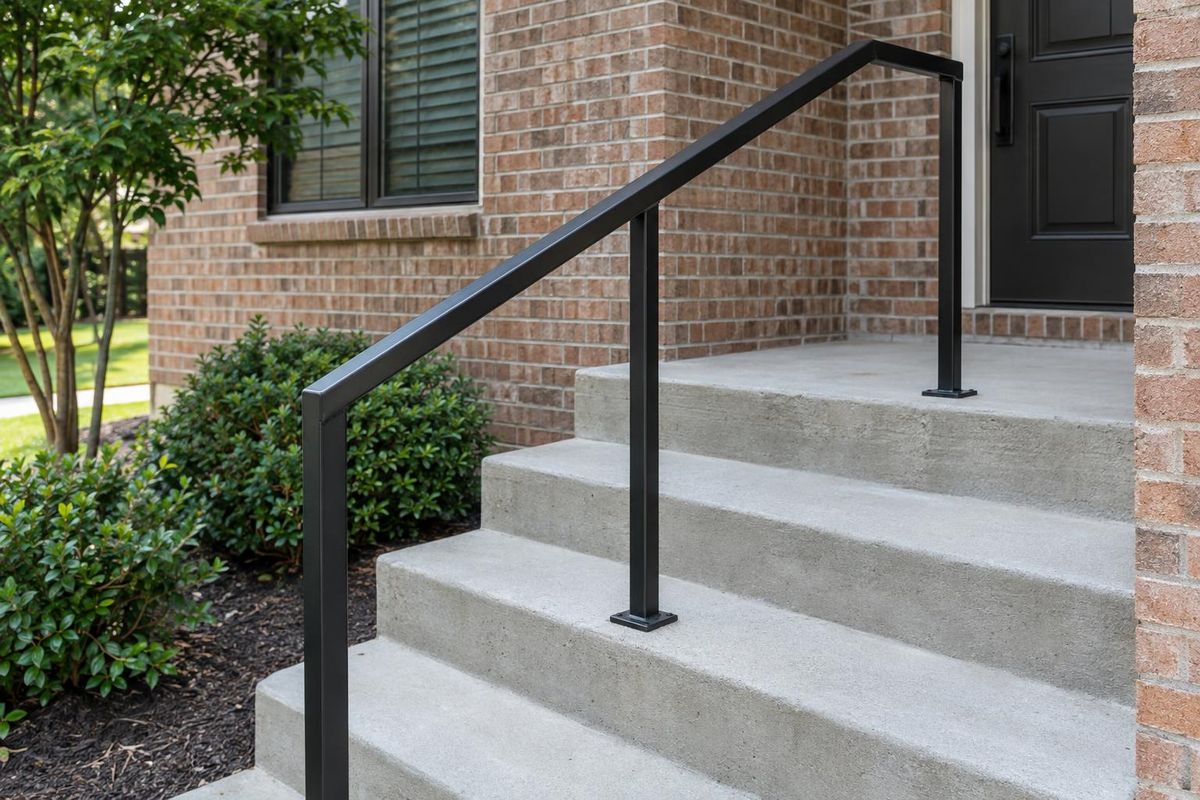
If a railing moves, if you see cracks or rust at a base or if there is no railing on steps of a few risers or more, call for a repair or a new rail. A welded rail anchored to concrete or framing is far stronger than most store-bought kits.
Do not wait for a fall to find out.
Quick answers
How high should a railing be?
Codes commonly require a certain minimum height, but it varies. Check your local requirements.
Can a wobbly railing be fixed?
Often yes, by re-welding or replacing the post base and re-anchoring it.
Do steps need a handrail?
Most codes require one on stairs with several risers. Check your local rules.